
Flood Insurance in Florida: Why Your Homeowners Policy Isn't Enough
![[HERO] Flood Insurance in Florida: Why Your Homeowners Policy Isn't Enough](https://cdn.marblism.com/uUwgw-hkNiI.webp)
I trust this message finds you well! Today, I want to address something that catches far too many Florida homeowners off guard, a gap in coverage that could leave your most valuable asset vulnerable when you need protection most.
Here's the reality: Your standard homeowners insurance policy doesn't cover flood damage. Not a single drop. Not an inch of water. And in a state surrounded by water on three sides, sitting barely above sea level, with afternoon thunderstorms that can dump inches of rain in minutes, that's a problem we need to talk about.
The Costly Misconception About Homeowners Insurance Florida Coverage
If you've been operating under the assumption that your homeowners insurance has you covered for flooding, you're not alone. This is perhaps the most widespread, and expensive, misconception in the insurance world. The truth is that standard homeowners insurance policies explicitly exclude water damage from flooding, leaving countless Florida families financially exposed to one of our state's most common perils.
Think about that for a moment. We live in the Sunshine State, but we also live in the Hurricane State, the Thunderstorm State, the Storm Surge State. Yet the very insurance policy you count on to protect your home draws a hard line when it comes to rising water.
Why? The insurance industry separates "water damage" into categories. If a pipe bursts inside your home, that's typically covered. If your roof leaks during a storm and water seeps in from above, homeowners insurance may step in. But if water rises from the ground, flows over land, or surges in from the coast, that's classified as flooding, and it requires separate coverage.
Florida's Unique Flood Vulnerability: It's Not Just Coastal Properties
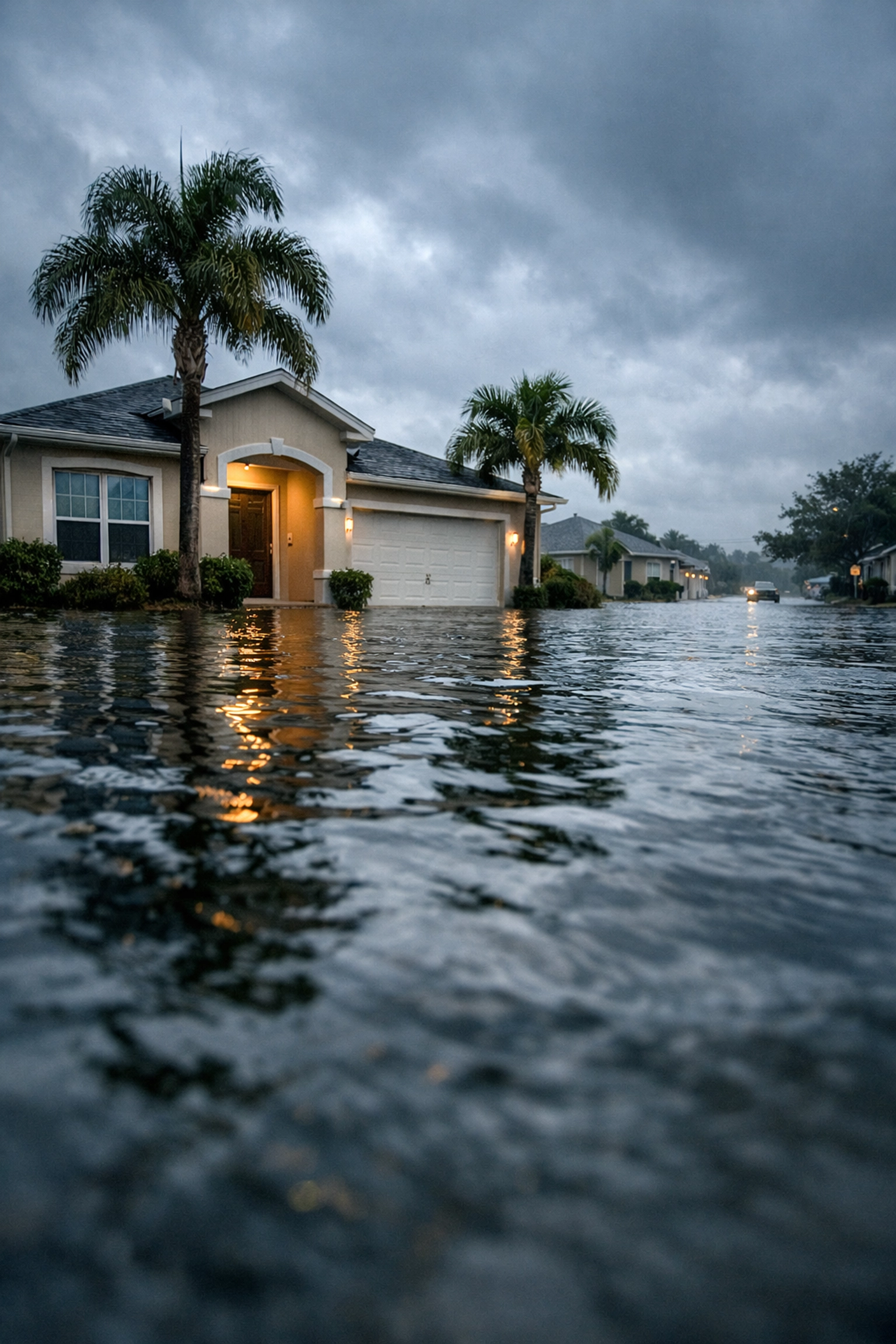
Let's talk about why flood insurance Florida policies are so crucial, especially here. Our beautiful state faces a perfect storm of flood risk factors that make this coverage essential for virtually every homeowner:
Hurricane Season Brings More Than Wind Damage From June through November, we're all watching the tropics. While most people worry about wind damage from hurricanes, the reality is that water causes the majority of destruction during these storms. Storm surge can push walls of ocean water miles inland. Hurricane rainfall can drop 15-20 inches in a single event, overwhelming drainage systems and causing catastrophic flooding far from the coast.
Afternoon Thunderstorms Aren't Always Harmless Those daily summer thunderstorms that cool things off? They can dump incredible amounts of rain in remarkably short timeframes. When storms stall or "train" over the same area repeatedly, the result is street flooding that can quickly enter homes, even in neighborhoods that have never flooded before.
Our Flat Terrain Creates Drainage Challenges Florida is remarkably flat. We don't have hills and valleys that naturally channel water away. Instead, water tends to pool, spread, and linger. As development increases and more natural land gets paved over, the water has fewer places to go. That's why flooding increasingly happens in areas never historically considered at risk.
Sea Level Rise Is Changing the Game It's crucial to note that what was considered "safe" from flooding twenty years ago may not hold true today. Rising sea levels mean higher groundwater tables, increased tidal flooding, and greater storm surge potential. The flood maps are constantly being redrawn.
Here's the statistic that should grab everyone's attention: 25% of all flood claims come from properties outside designated high-risk flood zones. That means one in four people who experience flood damage thought they were safe. They lived in what FEMA calls "low to moderate risk" areas, and they learned the expensive way that "low risk" doesn't mean "no risk."
Florida's New Flood Insurance Requirements: What You Need to Know
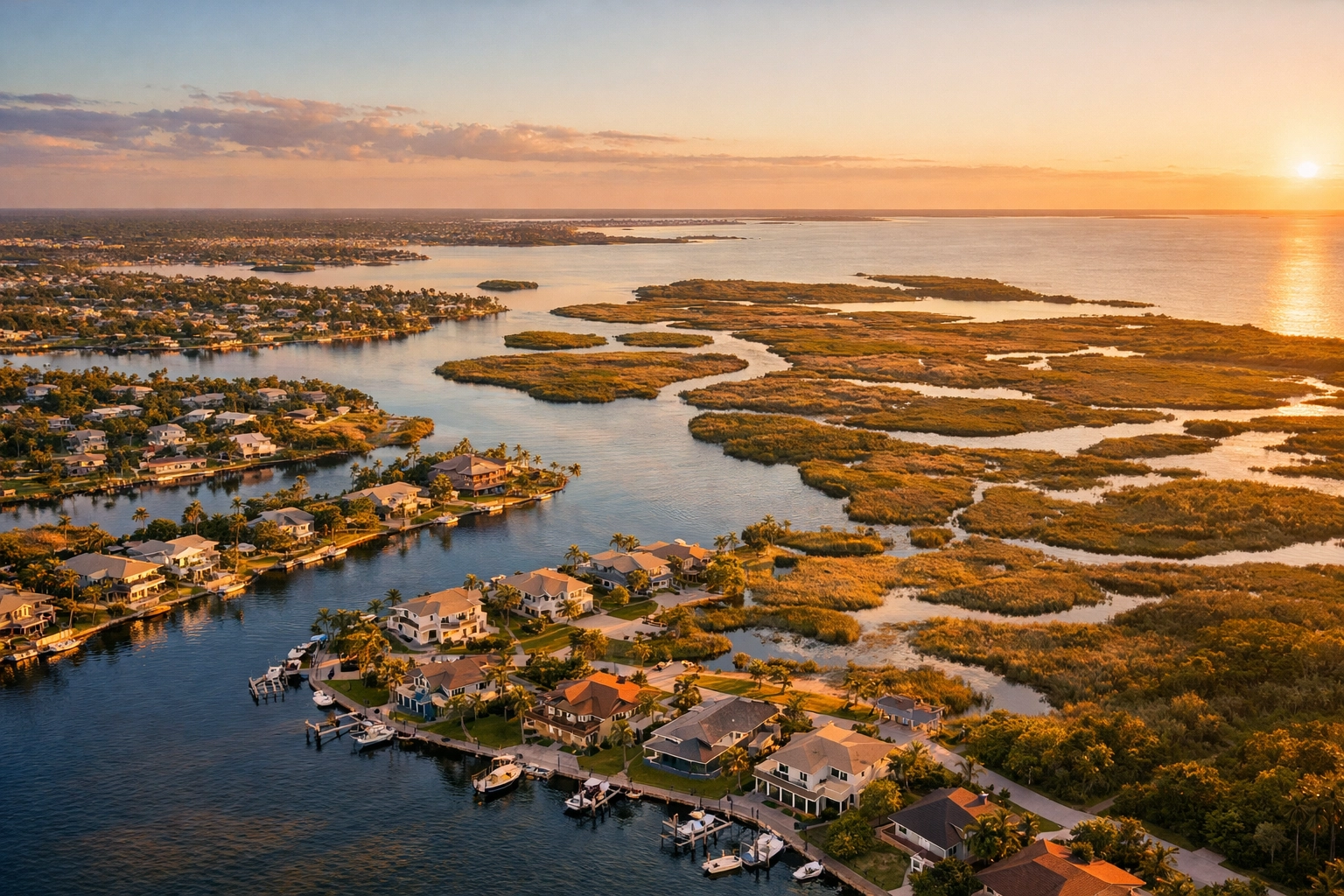
Recently, Florida lawmakers recognized this coverage gap and took action. They enacted legislation requiring certain homeowners to carry separate flood insurance, a move that underscores just how serious the flood risk is across our state.
For policyholders with Citizens Property Insurance (Florida's insurer of last resort), flood insurance is now becoming mandatory through a phased approach based on property values. This requirement applies regardless of whether you're in a designated flood zone, which tells you everything you need to know about how seriously the state views this risk.
However, and this is important, you don't need to be a Citizens policyholder for this to matter to you. The legislation simply highlights what all Florida homeowners should already be considering: flood insurance isn't just for beachfront properties anymore. It's pragmatic protection for anyone who wants their largest investment protected from one of the most common natural disasters in our state.
Understanding Your Flood Insurance Florida Options
When it comes to securing flood coverage, you essentially have two paths: the National Flood Insurance Program (NFIP) and private flood insurance. Both have their place, and the right choice depends entirely on your specific situation.
The National Flood Insurance Program (NFIP) The NFIP is a federal program that's been the backbone of flood insurance for decades. It offers standardized coverage with caps at $250,000 for dwelling coverage and $100,000 for contents. For many homeowners, particularly those with modest home values, the NFIP provides solid, affordable protection.
However, the NFIP has limitations. Those coverage caps may not be sufficient if you have a higher-value home or extensive personal property. The program also has standard deductibles and coverage restrictions that might not align with your needs.
Private Flood Insurance This is where things get interesting. The private flood insurance market has expanded significantly in recent years, and for many Florida homeowners, private options can offer superior coverage at competitive rates.
Private insurers can provide:
- Higher coverage limits beyond the NFIP caps
- Potentially lower premiums for properties in lower-risk areas
- Additional coverage options like temporary living expenses
- Often faster claims processing
- More flexibility in policy customization

How First Horizon Insurance Helps You Find Competitive Rates
Here's where working with an independent insurance agency like First Horizon Insurance becomes your secret weapon. Because we're not tied to a single carrier, we can shop your flood insurance needs across over 40 different insurance companies, including both NFIP options and private market carriers.
This matters enormously when it comes to flood insurance. Premiums can vary dramatically between carriers based on how they assess risk, what additional coverage options they offer, and how they price policies. What one insurer quotes at $2,000 annually, another might offer for $1,200 with better coverage.
Our process is straightforward:
- We gather information about your property, location, construction, elevation, flood zone designation
- We tap into our network of carriers to request multiple quotes
- We present you with clear comparisons showing coverage differences and pricing
- We help you understand the nuances so you can make an informed decision
- We handle all the paperwork and coordination
The best part? This comprehensive shopping costs you nothing extra. You're getting access to competitive rates across dozens of carriers with the convenience of a single conversation.
Taking Action: Protecting Your Florida Home
The reality is that flood damage is financially devastating. The average flood claim exceeds $30,000, and even a few inches of water in your home can result in tens of thousands in damage when you factor in flooring, drywall, electrical systems, appliances, and personal belongings.
Waiting until a storm is approaching is too late, flood insurance policies typically have a 30-day waiting period before coverage begins. The time to act is now, while the skies are clear and you can make thoughtful decisions about your coverage.
Whether you're a longtime Florida resident or new to the area, whether you're on the coast or inland, whether you're in a designated flood zone or not, flood insurance deserves serious consideration. The question isn't really "Can I afford flood insurance?" It's "Can I afford to be without it?"
Your Next Step Forward
At First Horizon Insurance, we're here to make this process easy. We'll shop through our network of carriers to find you the flood insurance Florida coverage that makes sense for your property and your budget. We'll explain the differences between options in plain English, answer your questions, and ensure you have the protection your home deserves.
Please don't hesitate to reach out to us for a flood insurance quote. We'll shop the market, present you with competitive rates, and help you make a decision you can feel confident about. You can also explore all the carriers we work with on our carriers page.
Your home is likely your largest investment, and protecting it properly is too important to leave to chance. Let's make sure you have the comprehensive coverage you need when Florida's weather reminds us why they call it the Sunshine State( because the rain has to stop eventually.)
![[HERO] Why Choosing an Independent Insurance Agency Will Change the Way You Shop for Coverage](https://irp.cdn-website.com/680135e3/dms3rep/multi/opt/indep-agency-1920w.png)